with thanks to Farm manager, Josh Wright, Bishop Burton College, East Yorkshire
The golden hoof is increasingly evident at Bishop Burton College farm where sheep are playing a vital role in the arable rotation. “We’re about maximising output while reducing the reliance on inputs, including fertiliser, increasing soil organic matter levels and improving soil health,” explains farm manager, Josh Wright. “We are mainly using sheep to do the job and our Innovis genetics perfectly fit the forage-based system grazing cover crops and leaving behind FYM.
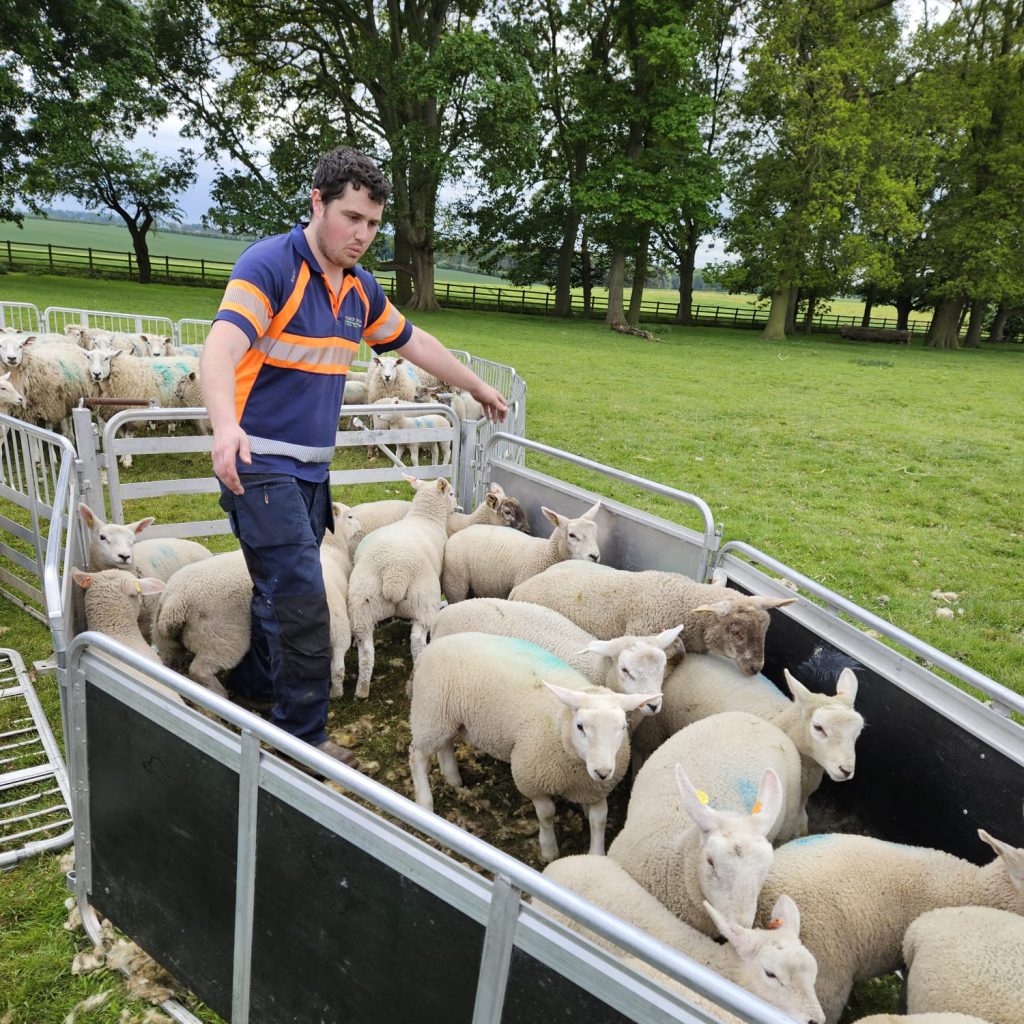
“In fact, the April lambing Aberfield Highlander ewe flock put to either the Abermax or Aberblack is delivering fantastic performance rearing an average 156% lambs that go on to finish to 20kg deadweight and grade within R3L. Up to 20% of lambs are ready to go finished by 18-week weaning without any creep, and the vast majority are gone by December. Any stragglers and we sell them store so we can have a reset in January.
Fact File
- 300ha arable, grass, forage crop mix
- 380 Aberfield Highlander ewes crossed to Abermax or Aberblack
- 300 breeding sows
- 160 head beef finishing unit
“We lamb indoors – it’s part of the college curriculum to involve students in practical routine jobs and its staggered across the academic term, however given different circumstances I would happily lamb outdoors within a tight three week period in April since intervention is minimal, the lambs are soon up and sucking – I’ve never seen so much milk, and the ewes go on to look after their lambs exceptionally well,” he explains.
“The college farm’s main focus is to teach the next generation of farmers this is a profit led, fully commercial unit demonstrating sustainability – nature is at the heart of what we do, while our work is centred around an ambitious target – to reach carbon net-zero by 2040,” says Josh who was appointed to the role two years ago and soon after got to work writing a five year strategic plan for the unit which for the first time included cover crops for the sheep in the arable rotation.
The Aberfield replaced the mix and match flock of Texels and Suffolks back in 2019 in the college’s quest for a lower input, smaller ewe averaging 65kg to 70kg with accompanying high output. Since then, the Highlander has been added to introduce more prolificacy while the unit is currently working towards a closed flock. In addition, Continental terminal sires have been replaced by the Abermax and Aberblack. “Despite having worked with sheep, I’d never heard of Innovis genetics until I was appointed to this job two years ago, however I’d now recommend them to any sheep farmer.”
Shepherd, Will Gale agrees: “We like the whole package. When it comes to investing in new rams, then I check out the EBVs for various traits, make the order and Innovis sends them to the farm. We also like them not too leggy and with a good strong frame. We like the fact each of these rams have been properly recorded, it means we can accurately predict how they will breed, and since they’ve been bred from large populations of commercially farmed sheep, then the selection pressure has been really on.”
Josh continues: “The routine is to house ewes 10 days prior to lambing, feed a forage based TMR and within 48 hours of lambing turn out on to overwintered cover crops grazing them down before desiccation and drilling spring crops. Immediately after weaning, lambs are introduced to a 10ha multi species cover crop for eight weeks, while ewes return to a grass based rotational grazing system. Immediately after harvest a second 10ha cover crop is drilled in readiness for ewes to graze over winter.”
The Aberfield ewes are able to maintain themselves 365 in BCS 3.0 to 3.5 purely from forage, he says “We don’t have to flush them prior to tupping and we introduce the rams in a 1:60 ratio. We’re achieving an average five crops of lambs per ewe while the rams are working for an average five seasons.
He adds: “The Innovis genetics are bringing all round cost benefits from eliminating expensive concentrate yet achieving performance targets while fitting in to the rotation. They’re also a great addition to the teaching curriculum with their evidence base of breeding data. In fact we’ve such confidence in our flock we are not only planning to close it but also expand ewe numbers.”
If you want your hands on an Innovis ram, why not head to one of our upcoming sales.