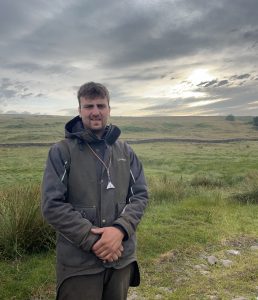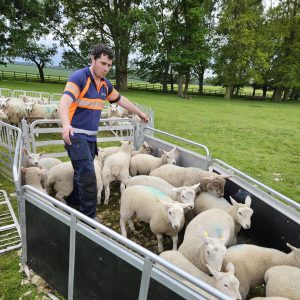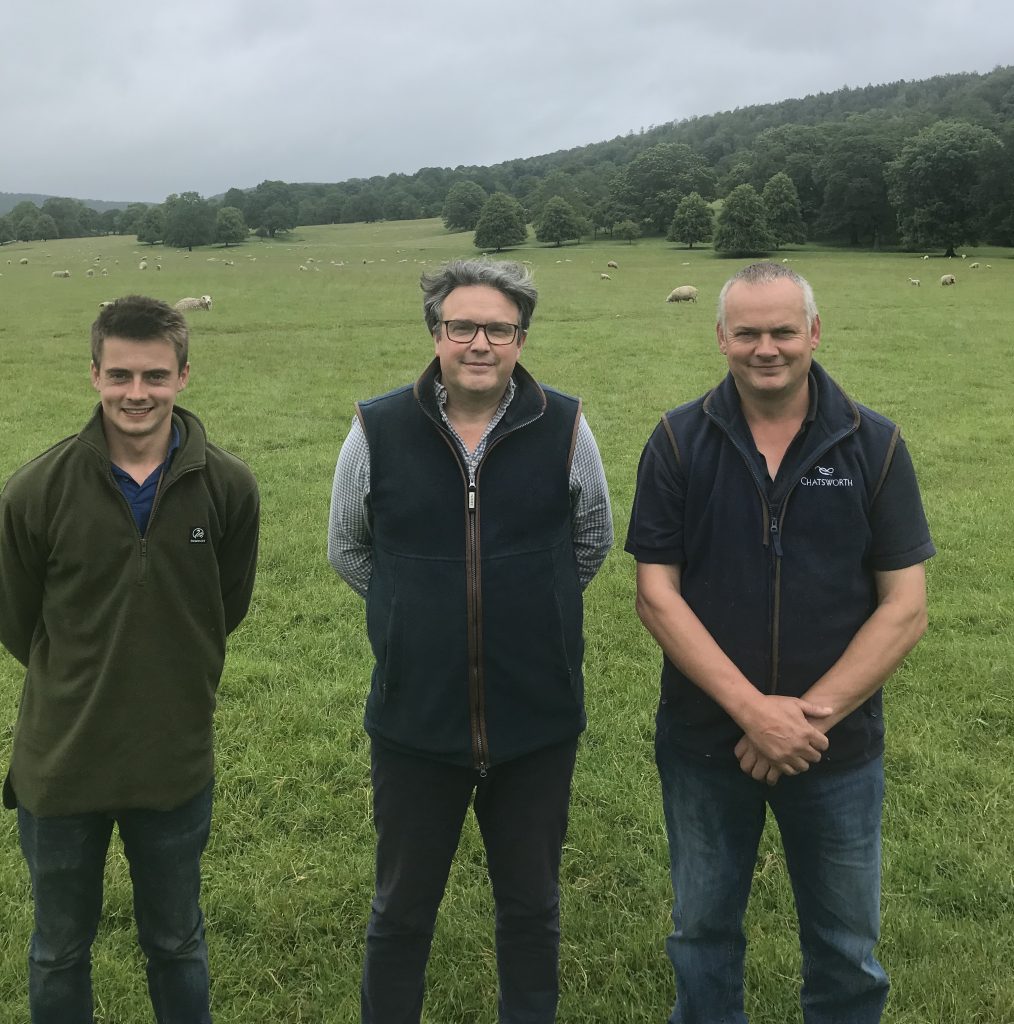
With thanks to Chatsworth Estate’s farm manager, David Howlett and head shepherd, Neil Priestly
Chatsworth Estate’s farm manager, David Howlett’s drive to develop a high performance 2,500-ewe forage based outdoor lambing closed flock that’s able to stand on its own two feet and managed by two shepherds, has become a reality thanks to his decision to replace the unit’s traditional flock with Innovis genetics.
“We want to produce meat from a profitable self-replacing flock that will thrive on homegrown forages. It’s part of Chatsworth’s ethos – to build a resilient farming business that can absorb a few shocks. Equally, we’re aware that improved efficiency will help towards lowering the estate’s carbon footprint to which we have committed to some ambitious targets,” he explains.
“Furthermore, we’re aware that we are sourcing proper recorded genetics from Innovis which can accurately predict how the sheep will breed, added to the fact over the last 10 years we’ve built a long-term partnership with the company, something that’s common place in New Zealand but not so much in the UK.”
Amongst the Aberfield ewe’s attributes, David says: “The aspect we really like is her ability to hold condition – BCS 3.0 to 3.5, all year round from pure forage diets and mineral blocks, giving us confidence we’re able to take the ewes through winter on hardier ground without adding extra energy to the system when there’s no need. We’re also saving labour and machinery feeding during the winter months.
“Post weaning, we run the ewes in mobs on marginal land up to 900’ right through to tupping before going on to overwinter on cover crops until three weeks prior to lambing and returning to the lambing paddocks, the exception being high energy blocks offered to triplet carrying ewes.
The Aberfield rams have also proved they can deliver. “We introduce the shearlings in a 1:90 ratio, and ewes 1:85 and these rams are working for an average four seasons. I’m very happy with a current average 1.8 scan and 1.65 lambs reared.”
Fact file
2,000ha
2,500 breeding ewes inc 2,000 Aberfields
700 Aberfield ewe lambs
350 suckler cow herd
Head shepherd, Neil Priestley comments: “Lambing is literally complete within a 21-day period during April. For the first time this season we’ve lambed the entire flock outdoors including singles and triplets in paddocks up to 30ha before moving on to a flush of old pasture.
“We check three times a day and intervention is minimal. Lambs are soon up and sucking, the ewes have ample milk, and if we do have to intervene, for example if a ewe is having an issue taking her lambs, then we’ll remove her from the breeding flock. Our Aberfields are also demonstrating real longevity averaging six crops and maturing at 65kg to 70kg.”
Turn the clock back a decade when the estate was focused on the flock evolving from a traditional high input enterprise. David’s priority was to develop a low input high output 2,500-ewe closed flock managed by two people. “We introduced the Aberfield as a trial, those ewes were self-replacing and left us with the highest margin of all the sheep at the time, which gave us the confidence to further develop the flock.”
Chatsworth’s sheep enterprise is not completely about performance, we take pride in how the flock looks too. The Aberfield does it.
Since then, the vast majority of ewes have been replaced with the Aberfield and the flock split – a nucleus A flock with maternal Highlander genetics introduced every third year to further enhance prolificacy, while terminal sires are introduced to the B flock and the Primera to the hoggs.
The entire crop is weaned at an average 16 weeks. Neil explains: “Historically, we have sample weighed at 16 weeks, however this year we have invested in an automated weighing system which will quickly enable us to monitor individual lamb performance at weaning. It is hoped that this will help us develop the flock further in the future using the data.”
Post weaning, the lamb crop is shipped to the estate’s nearby arable unit. “We push them on, on the herbal leys and forage crops included in the rotation during August and September before starting to draw big numbers of lambs when they’ve reached an average 22kg deadweight and are grading within specification.”
However, the Aberfield cross lambs have demonstrated they’re able to hold finish virtually 365. David explains: “Chatsworth Estate’s farm shop requires a year-round supply of lamb – that’s 25 finished lambs each week plus a supply to the estate’s four hotels.”
He adds: “Chatsworth’s sheep enterprise is not completely about performance, we take pride in how the flock looks too. The Aberfield does it.”