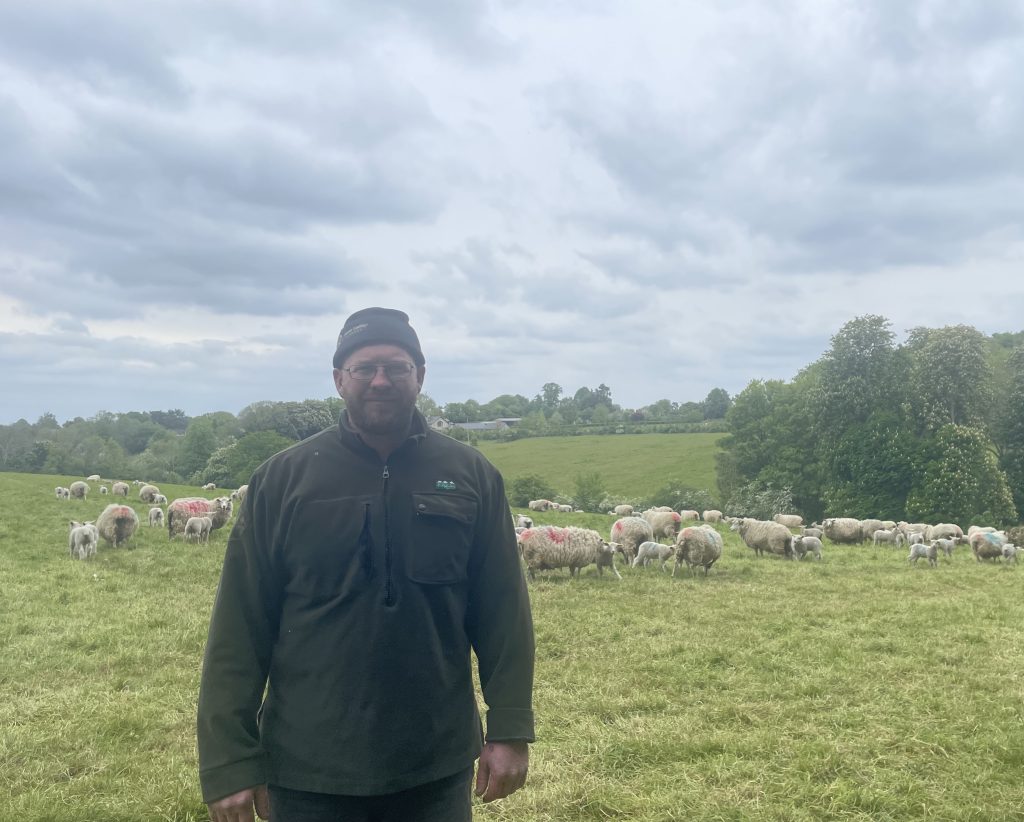
with thanks to Ian Watt, Ranmore, Ockham, Surrey
If you’ve already adopted a low input forage-based system, are you fully exploiting it with the best fit genetics? That’s the question Ian Watt addressed when he initially decided to invest in Innovis genetics which are heralding the start of a more efficient and profitable flock. And he is now finding that he has the potential opportunity to expand ewe numbers and eliminate the income deficit left by changes to the new payment system.
Fact file
500 acres grassland and forage crops on North Downs at 600’
300 Romney ewes crossed to Abermax
200 Continental cross ewes crossed to Aberfield SR and Abermax
350 head beef finishing unit
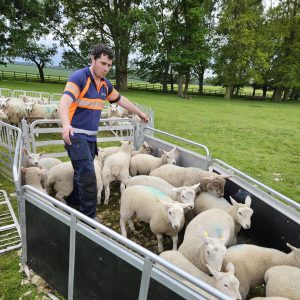
“We farm productive grass land on the North Downs within the Surrey hills and have always produced finished lambs off grass and forage crops. Two seasons ago we made one big change; we swapped our Continental rams for the Abermax to run with the outdoor lambing Romney flock. Productivity has increased: lambs reared, and growth rates have improved to the extent they’re now finishing to 45kg to 50kg target weight off grazed grass from 16 to 20 weeks – that’s one month earlier enabling pre tupping grazing to be freed up earlier and reducing the number of paid for tack days.
“The lambs have a better shape, the vast majority are grading within the R3L to U3L bracket, and they’re all finished off grass and turnips within a tighter period. We’ve also been able to step up ram to ewe ratio from 1:40 to 1:60, and this season we’ll be going to 1:70, and we’re expecting these rams to work for up to five seasons.”
Changing genetics didn’t stop with the Romney flock. Ian went one further in 2025 and introduced the Aberfield SR to his indoor lambing Continental cross flock previously crossed to a Continental ram. We expect to rear an average 160% this year compared to previously averaging 150%.
Both the Abermax and Aberfield SR rams are leaving newborn lambs with that vigour – they are up quicker.
“Both the Abermax and Aberfield SR rams are leaving newborn lambs with that vigour – they are up quicker. It’s also very noticeable these rams are producing lambs with narrower heads making for easier lambing. For example, we were pulling up to 30% of indoor lambing ewes creating potential damage to both ewes and lambs, this year it was significantly less, and our objective is now to minimise lambing issues. They also lambing over a tighter period.
“In fact, we are so pleased with the new Aberfield Continental cross, we are targeting retaining 80 ewe lambs as replacements each year and in turn grading up to a pure Aberfield flock which will also be lambed outdoors. Things are definitely changing – the decisions we make now will impact on the business for the next five or more years.”
Ian says he initially read about Innovis genetics online. “We felt our Continental rams weren’t giving us the best product – our main struggle was their feet issues, and some of the rams were only lasting just one or two years. We hesitated about changing genetics because we were so set in what we wanted to produce, however we learnt that Innovis rams are all properly recorded, so the company can accurately predict how the sheep will breed and it has a range of breeds to suit individual systems.
Innovis showed us great customer care and really understood us as farmers
“We touched base with Innovis’ technical advisor who chose the rams for us based on our decision to finish grass feed lambs and the ability to grow our own ewe lambs for replacements. We were pleased with the rams that arrived on the farm. If we hadn’t, then the company could have replaced them – Innovis showed us great customer care and really understood us as farmers.”
Injecting the flock with Aberfield SR genetics is also scheduled to result in a smaller more prolific ewe. “We expect mature weight to fall from an average 80kg to 70kg with a minimum 175% scan. In turn we are planning to expand the flock with more efficient homebred ewes while continuing to cross our Romney ewes with the Abermax, achieving higher performing lambs from both flocks.”