with thanks to Harry Monks, Goodfellow Farming, Northumberland
Take a traditional hill and upland flock; add a dash of Innovis genetics and the Blackface has a new-found modern role in the stratification system, says Harry Monks. “This is the future for the hill – the dynamics have completely changed. It’s a case of out with the Mule and in with the Aberfield cross Blackface – it’s here to stay since we’re proving it to be a lot more efficient and in turn more profitable,” he says.
Harry is shepherd to Goodfellow Farming, a mixed livestock and arable business including The Riding and The Reenes, comprising 1,200 acres of hard open hill to 1,000’ and inbye mix near Bellingham, Northumberland. The units carry 500 Blackface hill ewes crossed to Blackface or Aberfield together with 500 Aberfield x Blackface inbye ewes crossed to Innovis meat sires and a complementary 132 cow Angus cross suckler herd.
“For starters, the Aberfield cross Blackface gimmers scanning 170% to lamb to the Primera, are sufficiently hardy to outwinter on the heather hill at up to 1,100’ alongside the Blackface flock before coming down to the inbye to lamb,” he explains.
“These Aberfield crosses go on to mature into smaller, more compact ewes than a Mule, consequently we’ve been able to increase ewe stocking rate by over 10% and in turn we’ve around 10% more lambs. We’re feeding 50% less supplements at the turn of the year prior to lambing, and quite simply they’re an easier to manage sheep,” he explains. “We put one tup to up to 80 ewes, and they’re scanning 185% to 190%, rearing an average 180% and over 90% lamb within first 17 days. We expect five to six lamb crops and all our Innovis tups to work for six seasons.
“Ewes hold their flesh well remaining in BCS 365, they have better feet and they are perfect for outdoor lambing in April – they just spit out their lambs without any significant intervention and milk very well.
Added to that we’re now able to finish all the lambs off grass.
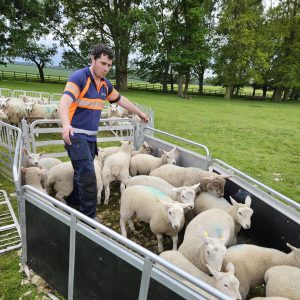
“Added to that we’re now able to finish all the lambs off grass. We also invested in Innovis’s Abermax, Abertex and Primera meat sires, and the vast majority of the crop is finished by October to 19kg target weight off grass at an average 20 to 24 weeks. Any stragglers are sold store. We’ve never seen the lambs grow so fast, and they’re a lot more uniform. Gathering, dosing and so on doesn’t drag on, and we’ve less feet to do so again we’re saving time and money.”
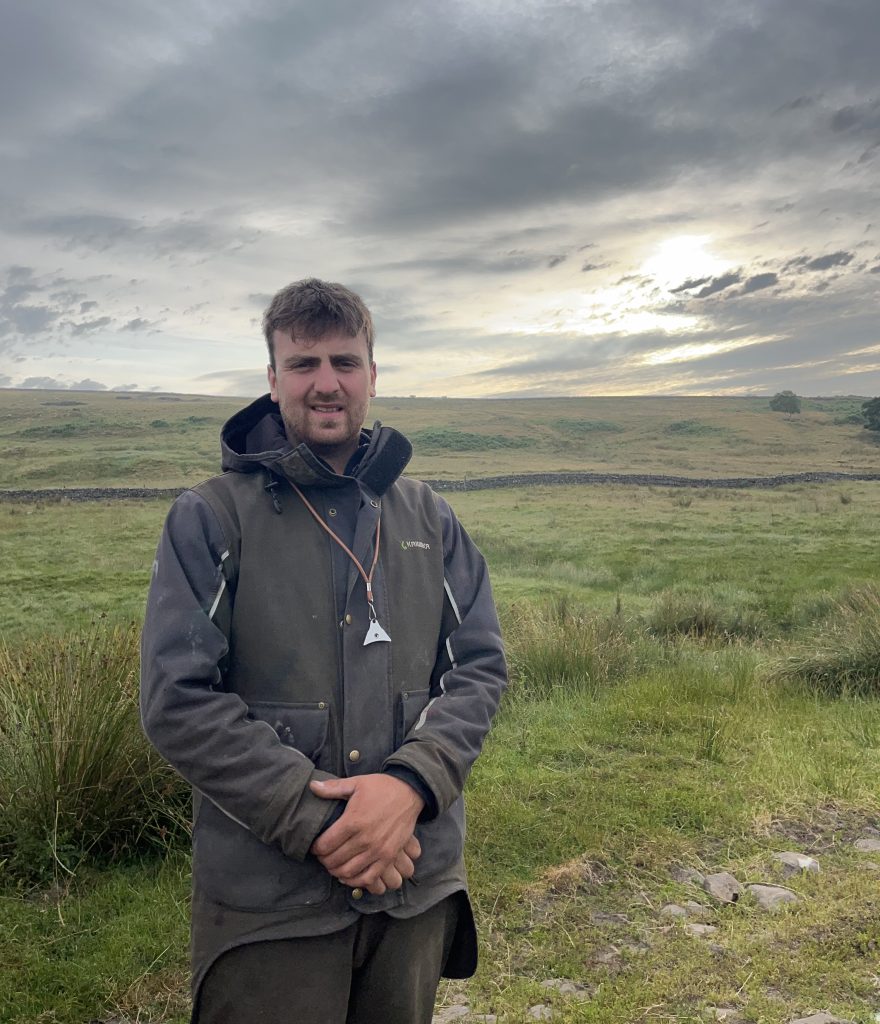
Harry who comes from a line of Northumberland shepherds, has been responsible for Goodfellow Farming’s sheep enterprise for the last seven years. “I’m a big Blackface enthusiast, it’s a brilliant breed, however I’m head over heart and always want to improve things wherever there’s an opportunity, and that’s what we got.
“The turning point came in 2021; we’d just taken on managing The Rennes to add to The Riding which the partnership has farmed for over 55 years. We stocked with a bought in mix of 200 North of England Mules and Suffolk crosses and 50 Aberfield cross ewes. A cold spring followed, there was little grass and we lambed outdoors. We had a lot of bother with the ewes, they had little milk and cold lambs, however it was noticeable the Aberfield’s lambs were soon licked dry and up and sucking, they were so sharp. Then we watched how much faster they grew.
This breeding strategy is now in its fifth year, and the maternal traits are really starting to pull through in terms of performance.
“We thought maybe we’re on to something and agreed to invest in a couple of Aberfield tups, one to put to the Blackface hill flock for replacement purposes and the other to the Mule ewes for finishing before we started to invest in Innovis’ meat sires. We’ve never looked back. This breeding strategy is now in its fifth year, and the maternal traits are really starting to pull through in terms of performance.
“In fact, since we took over managing The Reenes and introduced Innovis genetics, they’ve completely changed the business’s dynamics. Apart from the Aberfield crosses providing us with an opportunity to expand the original ewe numbers and close the flock, we also decided the extra land would give us the opportunity to kick on finishing virtually the entire lamb crop purely off grass, apart from those retained for replacement purposes. If we’d stuck with the original Mules and Suffolk crosses then it would take a lot longer to get those lambs away finished.
He continues: “That’s one of the great things working with Innovis, it offers a range of breeds to choose from to suit our system, and they’ve all been selected from large populations of sheep commercially reared on forage-based systems. There’s no breed society politics or views involved.
“We buy tups either direct from Innovis’ technical adviser or in Carlisle. We go for those within the top 10% of estimated breeding values – the Aberfields for maternal traits and meat sires for growth, and they’ve proved to accurately predict how those tups will breed. Also, the back-up is great. If we do have an issue, then Innovis is only one call away and it’s sorted – that’s massive compared to buying in the ring when sometimes you don’t know where the tup has come from.”