with thanks to Will and Lucy Heygate, farming with parents, Roger and Ann
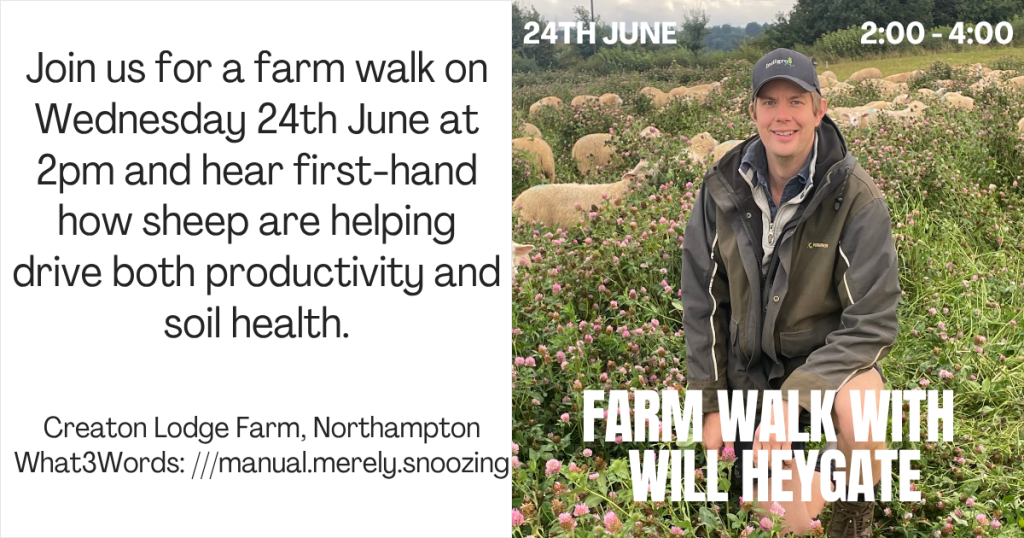
Register to come along to the event here.
The sheep enterprise
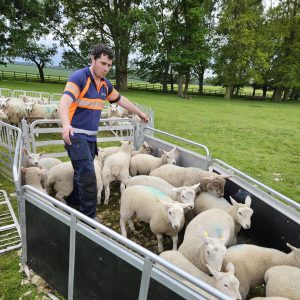
Introducing sheep to an arable regen system is ‘definitely working’, says Will Heygate. “Ten years into the system and we would never go back thanks to our Innovis genetics suited to forage systems and outdoor lambing. In fact, we are planning to expand the flock to 1,000 ewes, that’s virtually double the number we started off with.
“We’ve tried and tested the Highlander damline and found these ewes make for a good all-round sheep that do what it says on the tin. They’re good on their feet, lamb outdoors and get on with the job themselves so it can be managed solo. They milk well without any hard feed and really look after their lambs. With careful management most are able to hold themselves in BCS 3.00 all year round without any supplementary feed.”
The Heygate’s success story follows on after they initially found identifying sheep suited to their regen system posed a massive challenge. “We were aware from experience that sheep could be a nightmare; we’re a family that’s always had sheep, but we had farmed Continental and traditional crosses which required lambing indoors, we’d reached capacity plus the fact it was very time consuming. However, we knew that sheep would speed up the soil health journey.
“We looked long and hard for another breed and were attracted to Innovis, not only because all the company’s genetics are bred and reared in commercial forage-based systems, but also because they’re proper recorded stock accompanied by Estimated Breeding Values which reflect their genetic potential and enabled us to specifically select for maternal traits, growth rate and conformation and accurately predict how the sheep will breed. Previously, we selected by looks and we ran into issues.
“We were also aware that Innovis invested in long term relationships, the sort that are common place in New Zealand, and the company helps farmers to adopt a mindset that goes further than just selling sheep.”
He continues: “We’ve gone on to develop A and B flocks – a nucleus to breed our own replacements and a second which we put to the Primera and Abermax meat sires to introduce more shape and achieve a lamb finishing around 20kg and grading within spec. We don’t push these lambs grazing both herbal leys and cover crops within the rotation and we find they will hold finish beyond the new year.”
Going forward, and he forecasts a surge in the adoption of regenerative systems which in turn could bring opportunities for contract farming sheep on cover crops. “We have various arrangements which suit us as well as bringing the biggest bonus to the landowner – improving soil health.”
The regen system
The Heygates have introduced a range of establishment practices to their own unit together with those contract farmed. “Our objective was to offer winter cover crops for grazing together with four-to-five-year leys of legume rich grass mixes (GS4) or summer cover crops for finishing lambs, along with permanent pasture. We have leant a lot over the years.”
Up to one third of the annual rotation can be in cover crops or herbal leys, with the remainder in cereals.
Winter cover crops are drilled after wheat featuring for example, fodder radish, kale, turnips, clovers, buckwheat, mustard, linseed and others to create a diverse mix.
“The more diverse the mix the better to encourage a variety of rooting systems,” Will says. The crop is ready to graze from early December through to March when the ewes are reintroduced to permanent pasture for lambing.
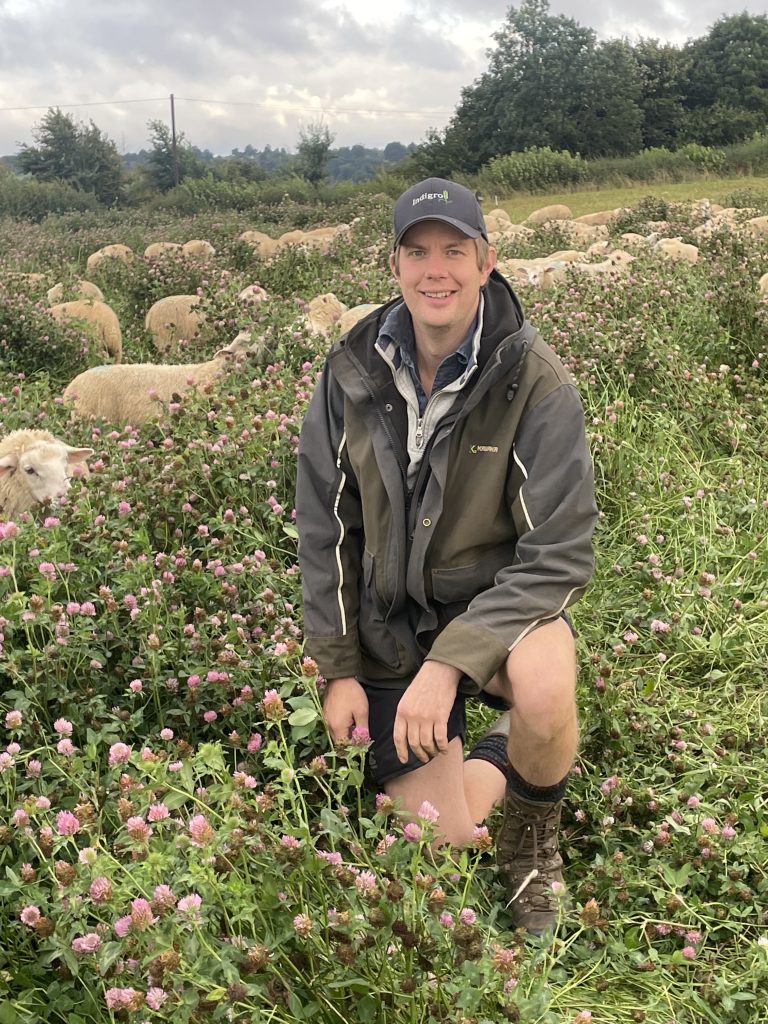
Alternatively, herbal ley mixes are drilled in August after wheat and featuring a high percentage of red clover and chicory to reintroduce fertility as well provide high protein clean grazing to mob graze and finish lambs on.
Pre tupping: ewes rotationally grazed on permanent pasture and topped up with haylage, according to the season, should they require it.
Tupping; split for three to four weeks into A and B flocks each with 50 to 200 Highlander ewes; on a looser rotation on the permanent pasture.
Post tupping to March: ewes re-mobbed up into groups of approximately 300 (block dependent) and moved to mob graze multi species cover crops planted on own and neighboring farmers’ arable land; aim for 2ha blocks at a time, depending on soil type and amount of fodder.
Lambing: returned to permanent pasture, set stocking 5 ewe per ha. All lambs tagged at birth, recorded to dam.
Post lambing: start bunching up into groups of 50 to 200 ewes and lambs and continue to rotationally graze permanent pasture.
90-day weaning: ewes shut up on permanent pasture and stocked very tightly to dry off before moving on to rotate permanent pasture again pre tupping.
Weaning to finishing: lambs spilt in to groups of 400 head, rotationally mob grazed around blocks of herbal leys; allocated 1.5 to 2ha, fence moved every two to three days. “We aim for them to eat a third, trample a third to help stabilize the soil and build organic matter, and leave a third before the fence is moved on to set up the next paddock. We’re careful not to graze too hard in winter.”